1. Home
  2. Industries
  3. Home services
  4. Home warranty sales teams

Home warranty power dialer

How home warranty sales teams use DialBreeze: up to three lines per caller, a recording of each connected call, and an AI summary written after the call.

Updated September 28, 2026Home servicesConditional fit: read the calling rules below

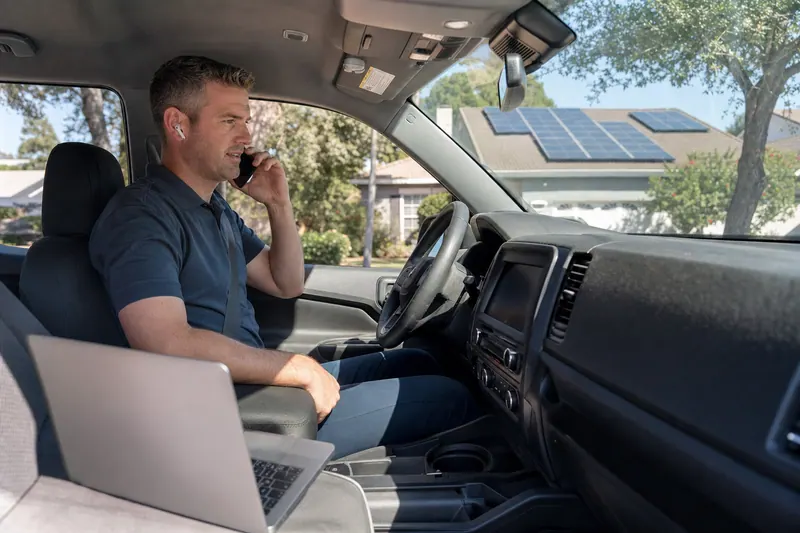
A home services rep on a call from his truck, solar panels on the roof behind Illustration, not a customer photo.

The short answer

DialBreeze is a browser power dialer for home warranty teams working quoted and renewal leads. You dial up to three lines, run each connected call yourself, and log the outcome. AI records available calls and summarizes the coverage question and the next step. Bring your own Telnyx account. This is a conditional fit because service contract sales carry state insurance and licensing overlays.

A calling day for home warranty sales teams.

The moments where a dialer, a recording and an after-call note change the outcome. Illustrative, not a customer story.

  1. Monday 9:00 a.m.: call the quotes from last week that were never converted.

  2. Tuesday 11:00 a.m.: call the renewals due inside the next 30 days with the current coverage in hand.

  3. Wednesday 2:00 p.m.: call the customers who used the plan once and let it lapse.

  4. Thursday 10:00 a.m.: call the realtor partners who include a plan with their listings.

  5. Friday 3:00 p.m.: call the homeowners who asked whether a specific system is covered.

The workflow, list to follow-up.

The same four moves every session, described the way home warranty sales teams work.

  1. Load quoted and renewal leads with the original quote date, the coverage tier and any consent language.
  2. Set the calling window per contact's local time and apply attempt caps.
  3. Dial three lines and confirm the systems, the age of the equipment and the coverage question.
  4. Disposition: enrolled, renewal confirmed, needs a coverage detail, not now, canceling, do not call.
  5. Read the summary and send the specific coverage detail the homeowner asked about with a dated follow-up.

What the notes look like after a call.

When recording is on, DialBreeze transcribes the call and writes a summary with a suggested next step after the call is processed. The summary can describe details like the ones in this card; they are not dedicated fields for this job. The card is a sample with fictional data. Check important details against the recording.

Fixed structured fields, same for every team: lead intent, timeframe, price band, geography, language, objections, next step, and flags for hot lead, Spanish-speaking agent needed, do-not-call signal and wrong person. The prompt is tuned for real estate calls; fields are not configurable per industry.

Outcomes to record in this workflow

  • Enrolled
  • Renewal confirmed
  • Needs coverage detail
  • Not now, follow up after renewal date
  • Canceling, retention path
  • Do not call permanently
  • Wrong number or property sold

DialBreeze has ten fixed dispositions, such as appointment set, callback, not interested and do not call. Pick the closest one and record the specific outcome in the note.

Information the summary may describeSample
Intent
Homeowner is deciding whether to renew after one claim and wants to know what the plan excludes.
Current plan
Mid tier, one year in
Systems
Water heater replaced under the plan last spring
Concern
Wants clarity on the age-based replacement rules
Timeline
Renewal due in three weeks
Channel
Prefers email for documents, phone for questions
Next stepSend the exclusion summary and the replacement rule for the water heater, then call back in five days.

Home warranty sales is a coverage conversation, not a features conversation. The homeowner wants to know whether the thing that broke last time will be covered next time. Everything else is secondary.

Why this page carries a conditional fit

A service contract is regulated as a form of insurance in many states, with its own licensing, disclosure and cancellation rules. The federal calling rules still apply, and a realtor referral arrangement can raise RESPA questions when it touches a federally related mortgage loan. If your campaign depends on cold calling with no prior request, this is not the right tool for that plan.

Three workflows that carry warranty sales

Open quote follow-up. The homeowner asked for a price and never enrolled. The useful question is which system they are most worried about, because that decides the tier.

Renewal block. Thirty days before the renewal date, with the current coverage in hand. Confirm the plan, the systems and any age-based rule that affects a future claim.

Post-claim check-in. The homeowner used the plan and is deciding whether to renew. This is the highest-value call in the book and the one most teams skip.

Dispositions warranty teams should track

Enrolled, renewal confirmed, needs coverage detail, not now after the renewal date, canceling with a retention path, do not call permanently, property sold. Cancellations need their own disposition and a reason. A hidden cancellation becomes a chargeback.

The rules that apply

A quote request usually supplies the basis for the callback, and the scope comes from the form or the source of the quote. 16 CFR 310.4(c) and 47 CFR 64.1200(c)(1) hold solicitation calls to 8 a.m. through 9 p.m. local time at the contact’s location. Refresh National DNC Registry scrubbing at least every 31 days for numbers that did not come from an inbound request.

Under 47 CFR 64.1200(a)(10), a revocation made by any reasonable means must be honored within a reasonable time not to exceed ten business days. Recording requires all-party consent in Washington (RCW 9.73.030) and California (Penal Code 632).

On the partner side, paying a realtor to include a plan with a listing can implicate 12 U.S.C. 2607 when the deal involves a federally related mortgage loan. Keep referral arrangements about a disclosed service, not a payment.

What the AI summary contributes

The coverage question and the systems at issue. Those two fields let a representative send the right exclusion page instead of a generic brochure. Verify equipment ages against the recording and the policy, because age rules decide coverage.

Cost and setup

Starter is $25 a month for one dialing seat. Pro is $49 a month and adds three lines, voicemail drop and AI summaries. Team is $79 a month for two dialing seats, plus $20 for each added dialer. Calling runs on your own Telnyx account, and Telnyx usage is billed separately.

Honest limits

DialBreeze dials up to three lines and documents the call afterward. It does not read a contract, does not determine coverage, and does not decide whether a number may be called.

The objections that decide a warranty call

“What does it actually cover?” The question is always about a specific system. Answer with the actual exclusion language, not a summary of benefits.

“I used it once and it was a hassle.” Ask what happened. The answer is usually a contractor availability problem or a misunderstanding about an age based replacement rule. Both are fixable, and both deserve a real answer.

“I am selling the house.” A plan tied to a listing is a different product conversation with a different buyer. Route it accordingly.

“The renewal went up.” Price changes are real. Answer with what changed and what the plan now covers, and give the homeowner time to read it.

A worked warranty block

Twenty minutes of list preparation, sorting quotes from renewals. Twenty five minutes of dialing. Fifteen minutes of review, sending the specific exclusion pages people asked about.

The high value block is the 30 day renewal window. A homeowner whose renewal is due in three weeks is making a decision now, and a policy question answered today closes more renewals than a call after the due date.

Warranty measures that mean something

Attempts, connects, renewals confirmed and cancellations. Cancellations need their own measure and their own owner, because a cancellation buried in a generic disposition becomes a chargeback.

Do not report a blended quote to enrollment figure across new sales and renewals. New quotes and existing plans have different conversion dynamics and different time windows.

Recording the coverage question accurately

The systems at issue, their approximate age and the specific question are the three details that matter. Age rules decide coverage, so verify ages against the recording and the policy before you say anything definitive. If the answer requires reading the contract, say that and follow up with the actual language rather than an interpretation.

Why retention calls deserve the same preparation as new sales

A renewal conversation is easier and worth more than a new enrollment, and it fails for one predictable reason: the representative does not know what happened on the plan. Pull the claim history before the call. A homeowner who used the plan twice and had a good experience is the easiest renewal in the book, and somebody who waits on hold for ten minutes to hear a generic pitch is the easiest cancellation.

Ask what the plan did well and what it did not. The answer usually names a specific process problem, and a representative who can route that problem to a real owner converts the call instead of logging a complaint.

Renewal windows and follow-up dates

The 30 days before a renewal date is the window that decides retention. Set the follow-up date inside that window, not after it, and keep the exclusion page the homeowner asked about attached to the record so the next caller can pick up the conversation without repeating it.

Calling rules to check first.

  • TCPA
  • 16 CFR 310 calling hours
  • National DNC Registry
  • 47 CFR 64.1200 consent and revocation
  • state all-party recording consent
  • state service contract and insurance regulation
  • realtor referral rules

A quote request generally supplies the basis for a callback, and the scope comes from the form or the source of the quote, so keep that record. 16 CFR 310.4(c) and 47 CFR 64.1200(c)(1) cap solicitation calls at 8 a.m. to 9 p.m. local time at the contact's location, and 47 CFR 64.1200(a)(10) requires honoring a revocation made by any reasonable means within a reasonable time not to exceed ten business days. Refresh National DNC Registry scrubbing at least every 31 days for any number that did not originate as an inbound request. Recording requires all-party consent in Washington (RCW 9.73.030) and California (Penal Code 632). Home warranty and service contract products are regulated as a form of insurance in many states, with licensing, disclosure and cancellation requirements, so confirm your state's position before the campaign. Offering anything of value to a realtor in exchange for including the plan can also implicate RESPA referral rules when it touches a federally related mortgage loan.

This is operational guidance, not legal advice. DialBreeze enforces the internal DNC list, quiet hours and attempt caps you configure; consent and list eligibility stay with you. How the responsibility splits.

DialBreeze is not a fit if…

Better to know now than in week two of setup.

  • You want to cold call homeowners with no prior quote, claim or request.
  • You expect AI to interpret the coverage contract. A person reads the policy.
  • You plan to describe the product as insurance when your state treats it differently.

Questions from home warranty sales teams.

Something missing? Email brayden@themilnerteamfl.com.

What makes the after-claim renewal call different?
The homeowner already used the plan, so the conversation is about what the plan did and did not cover. That is a policy reading, not a script, and the AI summary should flag the exact question.
Can I call a quote from six months ago?
Check the basis and your own policy. An old quote is a weak basis for a fresh call, and any number that did not come from an inbound request needs DNC scrubbing.
How do I handle a cancellation call?
Give it its own disposition and route it to a retention owner with the reason captured. Do not bury a cancellation request under a generic not interested.
Can I dial three leads at once?
Yes, up to three concurrent lines. Choose a concurrency your team can answer so answered calls reach a person inside the two-second window.
Does the AI capture the systems and ages?
It can, and those fields decide coverage. Verify the ages against the recording and the policy before you promise anything.
Do we keep our own numbers?
Yes. Production calling runs on your own Telnyx account, and Telnyx usage is billed separately, so your brand and caller ID stay consistent.
What does it cost?
Starter is $25 a month for one dialing seat. Pro is $49 a month and adds three lines, voicemail drop and AI summaries. Team is $79 a month for two dialing seats, plus $20 for each added dialer. Setup is assisted by a person on our team.

CRM reality, before you switch.

DialBreeze imports and exports CSV and can send signed disposition webhooks. There is no native two-way CRM connector today. Test the exact handoff your team needs during setup before switching.

What connects today

Checklist for the handoff

  • Import a small CSV with your real column layout, using synthetic rows, before a real list.
  • Send one disposition into your actual CRM or automation through the signed webhook.
  • Export the leads to CSV and check the columns your CRM expects.

See the workflow on your own list.

We set up your workspace, you connect your own Telnyx account and run a first controlled session, then you decide how to scale.

Request setupPricing